Ready One Player: Hercules and the 12 Labors
Can you defeat 12 mythical creatures and become a god?

Today we launch a new feature called Ready One Player. In it, we explore single player board games or those that have a solo component.
Hercules is one of the most popular myths. The son of the god Zeus, the legend says he killed his family, and needed to repent for his sins. To find forgiveness, Hercules was forced to serve King Eurystheus and complete 12 labors. If he could complete them all, he would become a god.
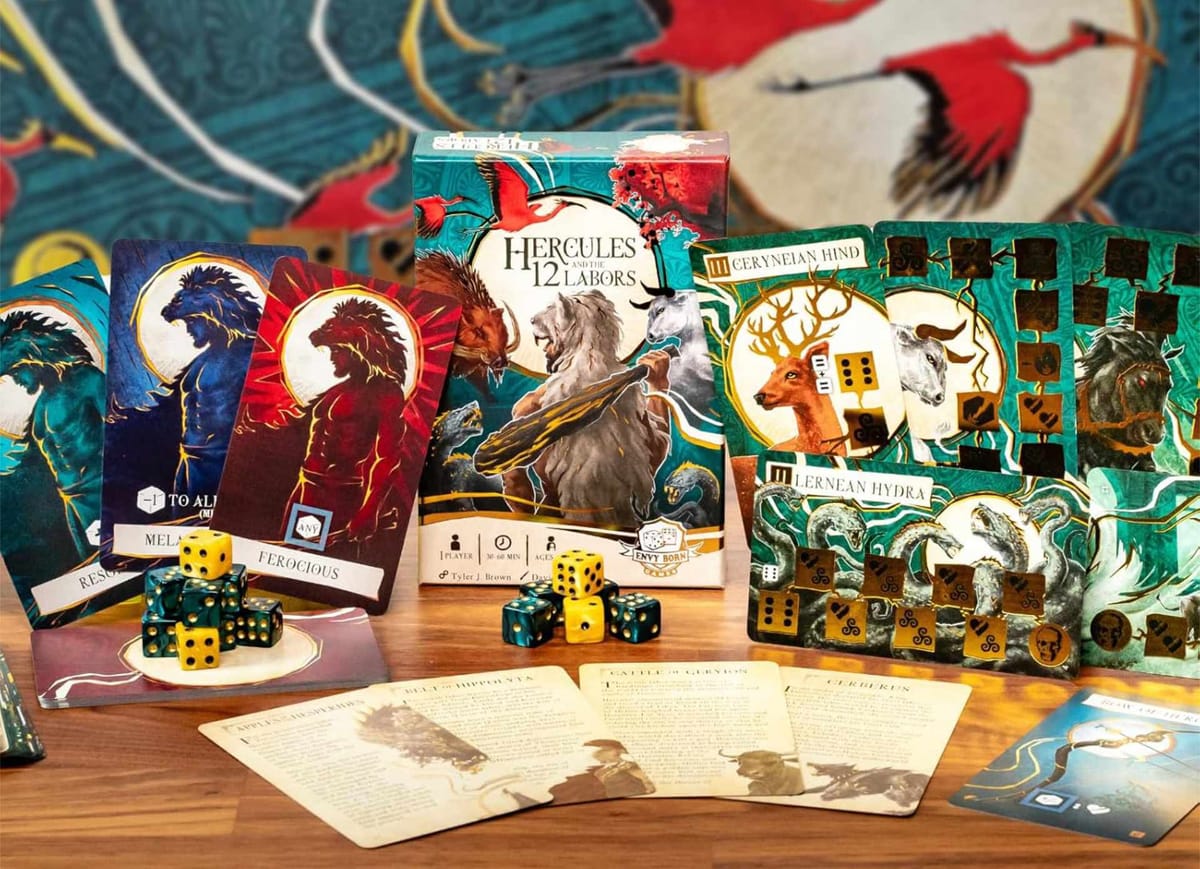
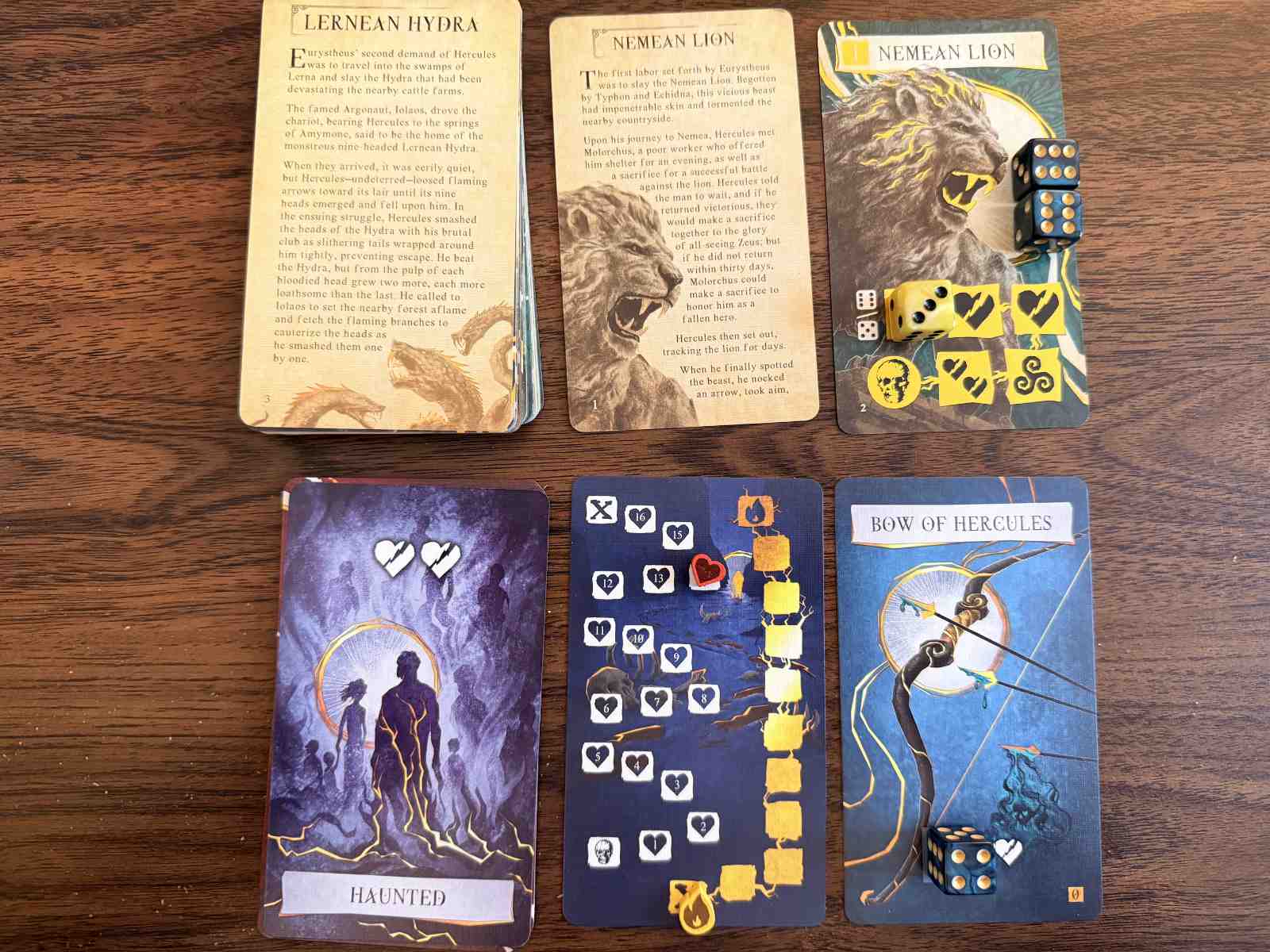
In Hercules and the 12 Labors, you play as the famous Greek legend as he works his way through these mythical fights. The game comes with 56 cards, 15 dice and two wooden tokens. The cards are broken down into labor, mood and lore. Labor cards are the actual creatures you fight, and are gold foil embossed and dual-sided. Lore cards provide an in-depth description of the opponent you are about to face. Labor and lore cards are played together. Occasionally a creature will have more than one labor card, signifying a more difficult monster.
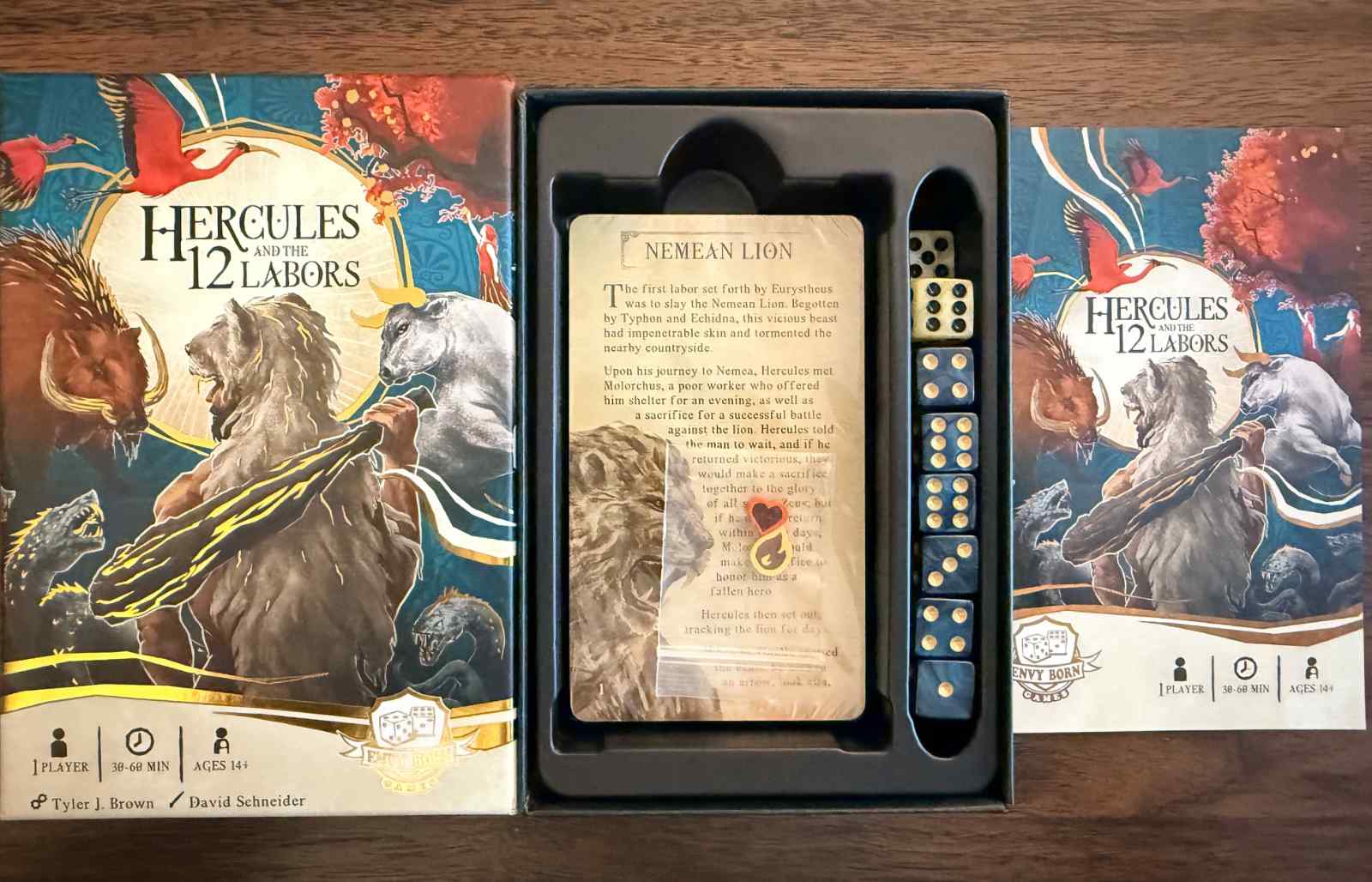
Setup is relatively easy. The lore and labor cards are all numbered in the lower corner, and come in the correct order when the game is first played. The mood card deck requires four cards to be removed, and the rest shuffled. The bow card and the spirit/divinity tracker are left out, with the corresponding tokens placed on the tracker at the x. Players start with between 3-5 green dice, depending on the difficulty. The lower the dice count, the more difficult the game is to play.
Once setup is complete, the player reads the first lore card and reveals the corresponding labor, along with a mood card. Mood cards add either positive or negative effects during each battle. Some examples include losing life, adding an additional die to your roll or reducing the number you roll on your dice by one. These effects last until the labor is defeated.
The player rolls their green Hercules dice on their turn. These dice will be placed to either damage the creature or provide bonuses to Hercules. Each labor card will contain between one and four yellow dice that are the monster’s hit points. The criteria to reduce the monster’s health vary, and after the player uses all their Hercules dice for that turn, the yellow labor dice move down the track on the card. The player will suffer whatever effect the dice land on that turn.
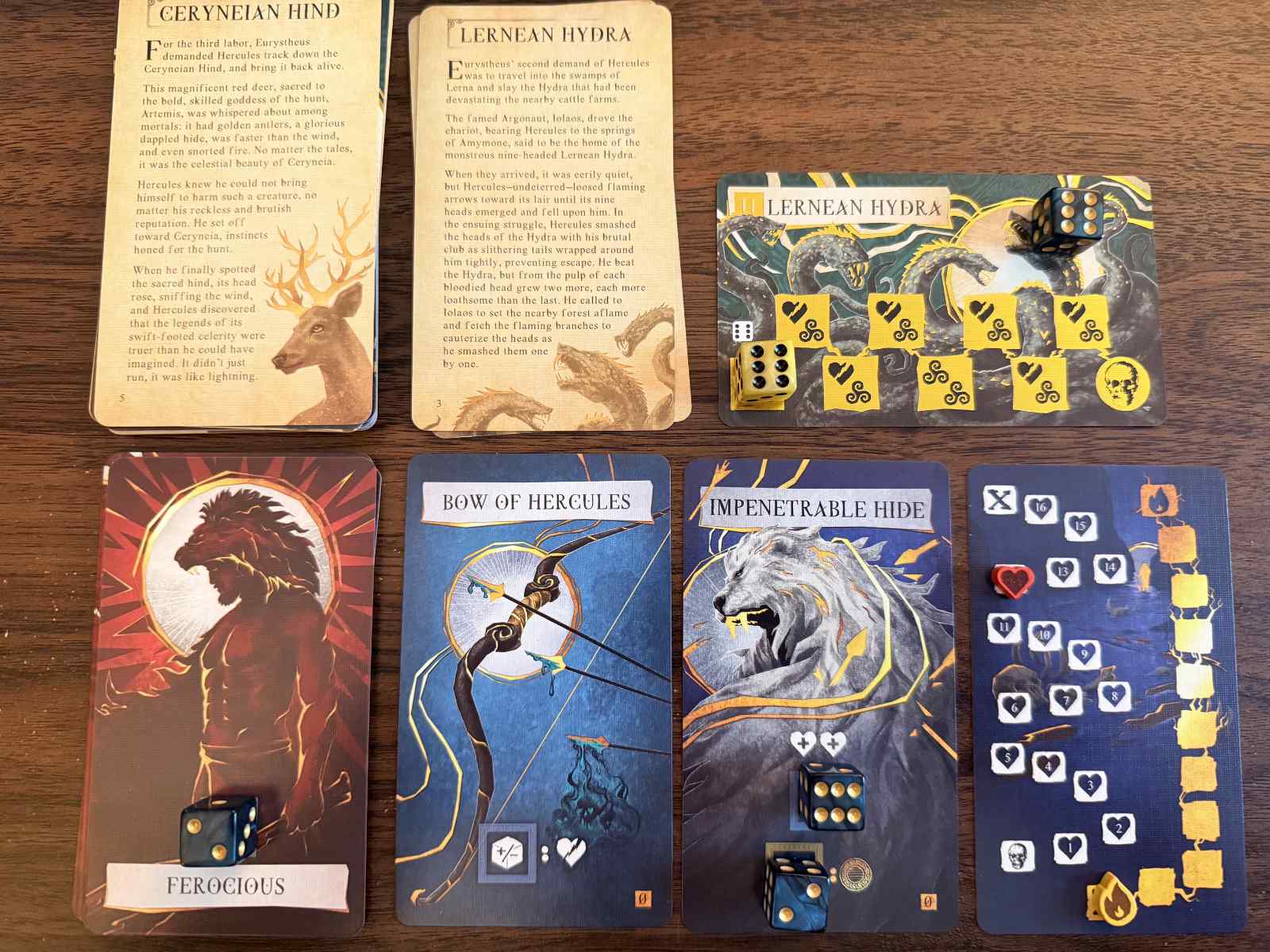
Players will also gather artifacts, which offer additional benefits. For example, the Bow of Hercules can raise or lower the number on a die by one at the cost of one health. The bow is equipped at the start of the game, but additional rewards are won by defeating enemies.
Play continues until the labor is defeated or the player is dead. The rules provide instructions on how to resume the game if your character is killed, or if you just need to move the game off your table for dinner. Once the battle is won, the reverse side of the card provides rewards. These consist of abilities kept throughout the game along with a one-time bonus. Bigger monsters are printed on multiple cards, and once defeated provide players with reward options. The player must choose which one they want to keep. Some examples of available rewards include rerolling dice, flipping one die or using dice to gain health.
Once one battle is complete, it’s on to the next. Lore cards precede the monster, and do a fantastic job breaking down the story of Hercules and the beasts he is forced to fight. For those who are unfamiliar with the mythology or do not remember, these provide the story of the game. The game is won when the player defeats all twelve labors and reaches the top of the divinity track.
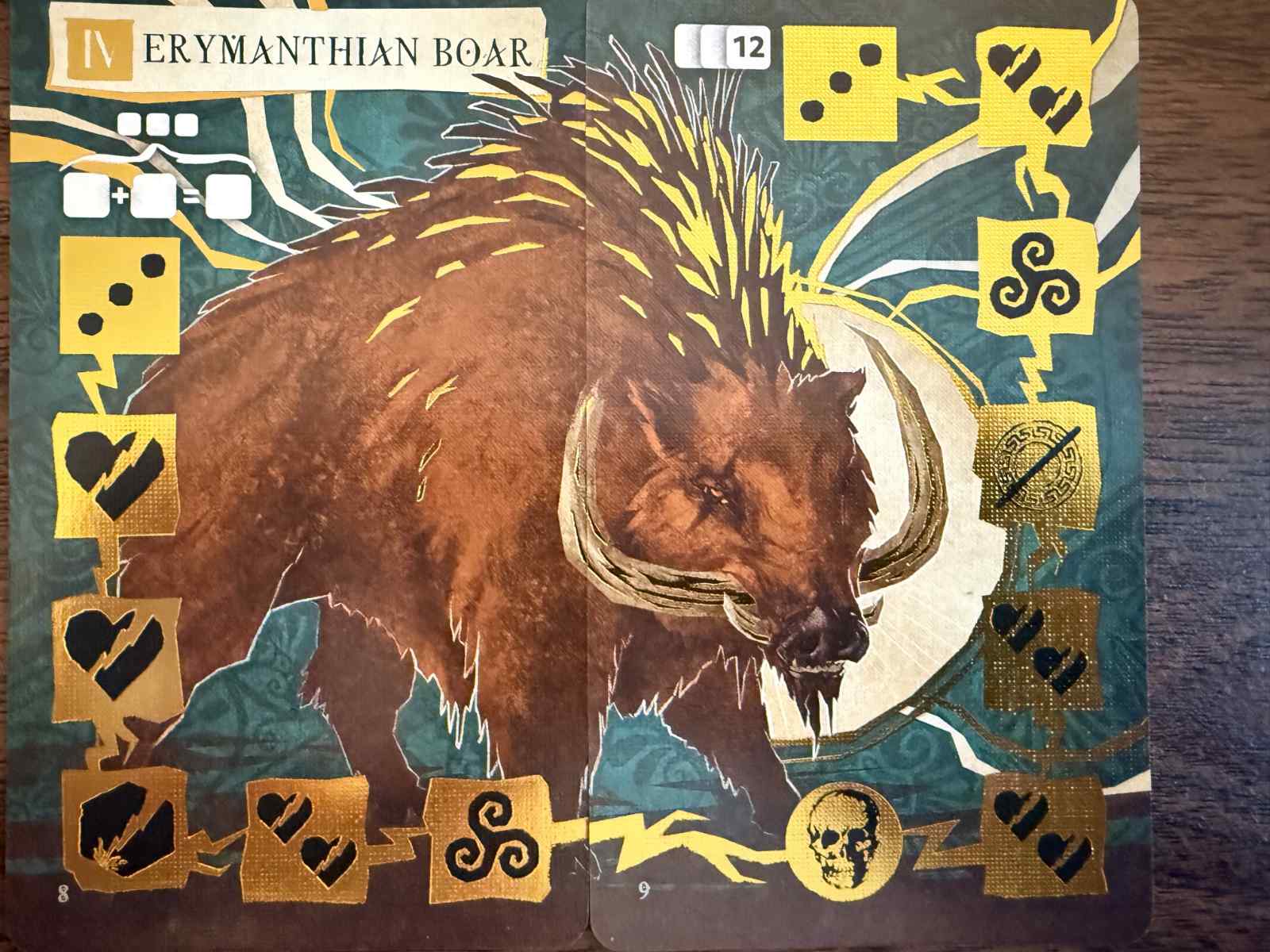
Hercules and the 12 Labors does a lot well. The labor cards are beautiful, while the lore cards provide extensive detail. Symbols on the cards can be confusing, but the instruction booklet breaks them all down. However, a reference card would be handy. Setup takes no time and the game plays fast after the first couple of labors. Gameplay is fun and the rewards add an additional dimension.
Hercules and the 12 Labors is also not without its flaws, with its biggest concern being replayability. Once a player knows the rewards and the structure of the game, are they going to want to play it again? The number of starting dice a player uses or and what they choose as a reward are the biggest variation. Mood cards add randomness, but nothing new to the game. Also, the game is mostly based on the randomness of a dice roll rather than skill.
Overall, Hercules and the 12 Labors is a lot of fun. Players will learn a lot about Greek mythology and enjoy manipulating dice to defeat creatures. On a 10-point scale, I gave Hercules and the 12 Labors a 7.4, knocking it mostly for replayability and a reliance on chance. If this sounds like your thing, you can pick it up here.
Review haiku
Delightful dice game
Mix mythology and art
Our first solo game
Links may be affiliate links that help support the site.